What Are Meme Coins? Dogecoin, Solana, and the Risks
Learn what meme coins are, where Dogecoin fits, why people trade them, and how Solana launches work, with community appeal and risks explained clearly.
On this page
Disclosure: QuantBase is made by the team behind memecoin.buzz.
Risk: Most meme coins go to zero. Not financial advice.
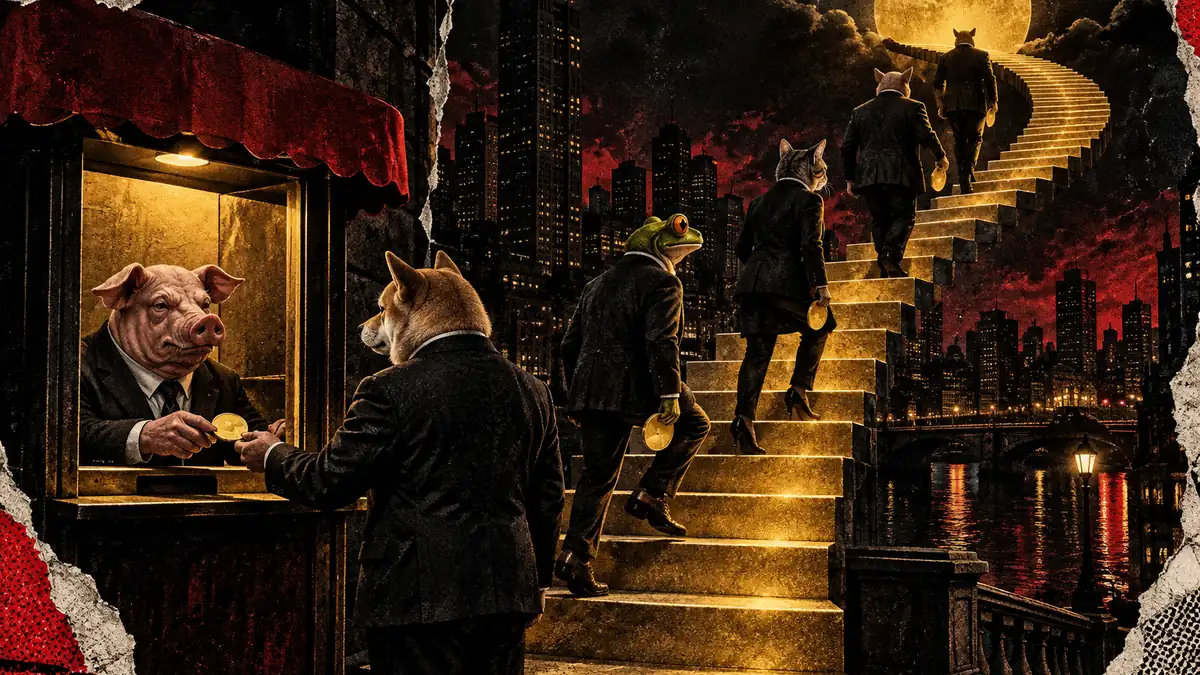
A dog picture becomes a cryptocurrency. A joke gets a trading market. A group chat treats its favorite token like a sports team. Welcome to meme coins, where internet culture and real money share an uncomfortable amount of space.
A meme coin, also written memecoin, is a cryptocurrency associated with an internet joke, character, trend, or community identity. The playful packaging does not make the money imaginary: people buy and sell these assets, and their value can change sharply.
The useful starting point is to separate the meme, the technology, and the market. A funny character can attract attention. A blockchain can record ownership. Neither tells you what someone else will pay for the coin.
What makes a cryptocurrency a meme coin?
Cryptocurrency is a digital currency or asset. A blockchain is a shared transaction record used by many cryptocurrency networks. Meme coins use this technology, but their identity usually begins with culture rather than a technical problem they aim to solve.
Coinbase’s introduction to memecoins connects the category to internet memes and trends. Think animal mascots, recurring jokes, and groups rallying around a recognizable idea.
The category is informal. There is no universal test that separates every meme coin from every other cryptocurrency. A project can begin as a joke and later develop additional uses. Another can advertise ambitious plans while remaining mostly a vehicle for speculation: buying because someone hopes to sell at a higher price.
It also helps to distinguish a coin, which belongs to its own blockchain, from a token, which runs on an existing blockchain. People commonly call both meme coins. The cultural label does not explain the technology underneath.
Where meme coins came from: Dogecoin
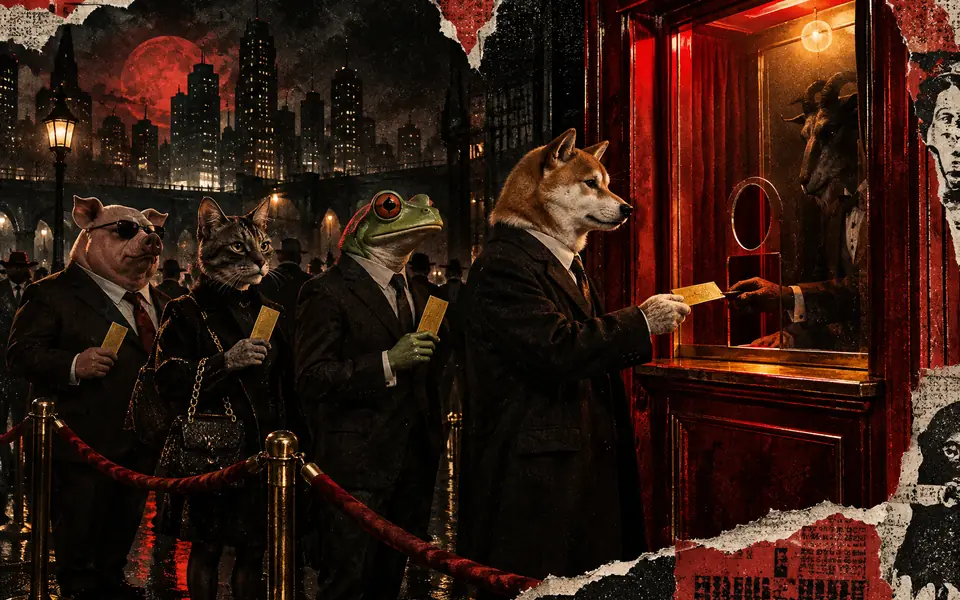
Dogecoin is the natural starting point. Created in 2013 by Billy Markus and Jackson Palmer, it drew on the Doge meme featuring a Shiba Inu. It approached cryptocurrency with humor rather than the solemn presentation common to financial projects.
As Dogecoin’s history explains, the project developed a community associated with tipping and fundraising. That matters because a meme coin can become more than a chart people watch. It can also become a shared activity and a recognizable internet identity.
Later projects adopted different mascots, jokes, and cultural references. The broader history of meme coins includes projects across different blockchain ecosystems. Dogecoin is an example, not a technical blueprint every later token follows.
A newly created dog-themed token is not the same asset as Dogecoin. Similar artwork does not establish shared creators, shared technology, or a shared community. A familiar-looking name can make something feel established without providing evidence that it is.
The enduring idea is simple: internet communities can organize around an asset as well as a joke. Once buying and selling enter the picture, participants can have very different reasons for keeping that joke alive.
How meme coins differ from other crypto
The main difference is usually the project’s emphasis—not a separate kind of cryptography.
Some cryptocurrencies emphasize payments, operating a blockchain, or providing access to an application. Meme coins often place more weight on recognition, participation, and community attention. These categories overlap, so the meme-coin label is not a complete description of what an asset does.
A useful comparison is between a product and a fan club. A product invites questions about what it does and who needs it. A fan club invites questions about why people care and whether they keep participating. A meme coin can involve both, but a lively fan club does not automatically produce a useful product.
Buying a token also does not, by itself, mean buying company shares or receiving a claim on business earnings. Any ownership rights need to be established separately; a mascot and a website do not establish them.
Community activity needs interpretation, too. People sharing artwork may genuinely enjoy a project. People posting enthusiastic messages may also hold tokens they want others to buy. Those motives can coexist. Community describes a group, not an independent quality check.
Where Solana and pump.fun fit
Solana is a blockchain ecosystem where meme tokens are created and traded. Saying a token is on Solana identifies its network, not its quality or purpose. Meme coins also exist on other networks.
Within that ecosystem, pump.fun provides a launch path. A bonding curve is a launch mechanism in which trading follows a pricing rule. In the pump.fun data supplied here, graduation means a coin has sold out its launch curve and moved to an open market.
For a closer explanation, see how pump.fun and its bonding curve work. The key beginner distinction is between creating a token and establishing sustained interest in it. Those are different events.
QuantBase’s own pump.fun recorder counted 20,661 launches and 841 graduations in the last 24 hours, as of October 25, 2026, at 09:18 UTC, according to its public statistics. These figures describe activity within that reporting window, not the entire meme-coin market.
Graduation is a market-structure milestone. It does not certify the creators, prove that buyers are independent, or establish lasting demand. Likewise, a busy launch feed tells you there is activity; it does not tell you which project deserves trust.
Why people trade them—and what can go wrong
Some people enjoy a mascot or online group. Some are curious about crypto markets. Others speculate on shifts in attention and demand. A participant can genuinely enjoy the culture while also hoping to sell later.
Community enthusiasm and trading incentives are not identical. Someone welcoming newcomers may be sincere, financially interested, or both. A popular post tells you that a message traveled; it does not establish why people shared it.
Sharp price changes and difficulty selling
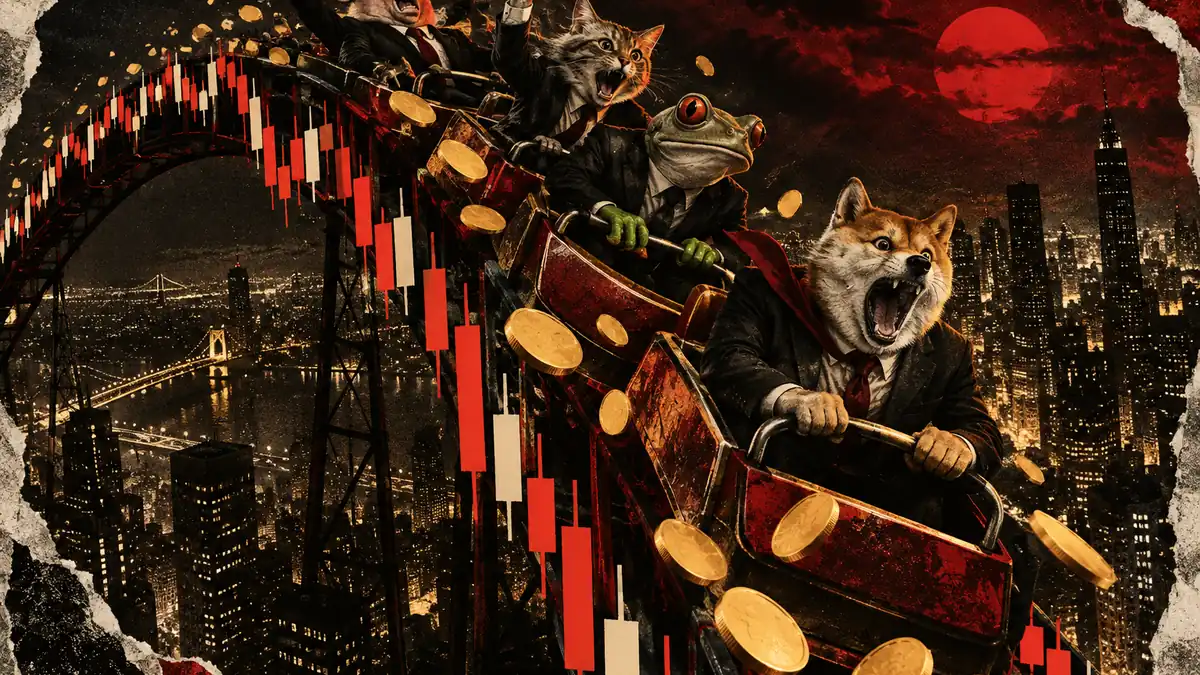
Volatility describes how sharply an asset’s price changes. The FTC’s cryptocurrency guidance explains that crypto values can move significantly and that a price decline may not reverse.
For meme coins, the distinction between attention and durable demand is especially important. Our guide to why meme coins are so volatile explores that relationship.
A displayed price is not a promise that every holder can sell at that price. Liquidity means the availability of assets or willing counterparties to support trading. A market can look exciting on a screen while offering poor conditions for an actual sale.
Manipulation, impersonation, and wallet loss
Not every disappointing project is a scam. But humor and community language do not prevent fraud either. The FTC describes tactics including celebrity impersonation, unsolicited investment offers, and fake investment websites that prevent withdrawals.
A rug pull broadly describes insiders exploiting or abandoning a project while other holders bear the damage. Our explainer on how rug pulls work separates the mechanisms from the catchphrase.
There are also operational failures: sending funds to the wrong address, losing wallet access, or having credentials stolen. The FTC notes that cryptocurrency payments generally cannot be reversed and that recovery help may be unavailable. A friendly group chat cannot undo a completed transfer.
Learning without confusing practice with proof
A useful beginner exercise is to explain a coin without mentioning its price. What is the joke? Which blockchain does it use? Why do people participate? What can be independently verified, and what is only a claim?
Then separate observation from interpretation. A busy chat is observable; the independence of everyone posting is a different question. Graduation describes a milestone; it does not mean someone has vetted the project.
Paper trading means practicing with simulated positions rather than real funds. It can turn a vague idea into explicit rules that are easier to review. It does not establish what future trading results would be or remove the differences between simulation and real execution.
For a hands-on introduction, test an idea on paper with QuantBase. QuantBase is a meme-coin trading app for Solana pump.fun coins; today it runs your rules on paper, with live trading coming soon. Paper trading is free with 150 credits per month. Because it uses no real funds, QuantBase holds none of your money.
Its community is the QuantBase traders’ Telegram group. As with any trading discussion, participation and evidence are different things.
The central lesson is not complicated: a meme explains why something catches the eye. Understanding the asset requires separate questions about technology, ownership, trading, and trust.
FAQ
What is a meme coin in simple terms?
A meme coin is a cryptocurrency associated with an internet joke, character, trend, or community identity. Its playful theme does not remove the real financial consequences of buying or selling it.
Is Dogecoin the same as other dog-themed tokens?
No. Dogecoin is a specific cryptocurrency with its own history and blockchain. Another token using a similar animal or name is a separate asset; resemblance does not establish a connection.
Are all meme coins scams?
No. A cultural or humorous origin does not, by itself, establish fraud. It also does not establish trustworthy creators, useful features, or dependable trading conditions.
Why are meme coins associated with Solana?
Solana is one blockchain ecosystem where meme tokens are created and traded, including through pump.fun. Meme coins also exist elsewhere, so the category is broader than a single network.
Does pump.fun graduation mean a coin is safe?
No. Graduation describes selling out a launch curve and moving to an open market. It is not an assessment of creator behavior, project quality, or future demand.
Sources
- What are memecoins? (Coinbase Learn)
- Dogecoin (Wikipedia)
- Meme coin (Wikipedia)
- QuantBase public pump.fun stats
- What to know about cryptocurrency and scams (FTC)
Written with AI assistance and checked by automatic gates: every number must trace to a source above, and quotes are short. Spot an error? Tell us in Telegram.